

300hr Yoga Teacher Training Rishikesh
Advanced level
Moksha Yogshala 300hr Yoga TTC in Rishikesh
- Core Styles: The curriculum primarily centers on Hatha Yoga and Ashtanga Vinyasa, including advanced asana practice.
- Advanced Studies: Covers the “internal landscape” such as Marma, Nadi, and Chakras, along with in-depth Yoga Philosophy (Sankhya and Tantra).
- Holistic Tools: Training includes the use of Bandhas, Mudras, Kriyas, and Mantras to enhance both personal practice and teaching ability.
- Professional Skills: Heavy emphasis on Teaching Methodology, anatomy, and the application of Ayurveda to help students lead classes with confidence.
300hr Yoga Teacher Training Rishikesh
The 300-hour program expands on foundational knowledge with a focus on mastery and professional instruction.
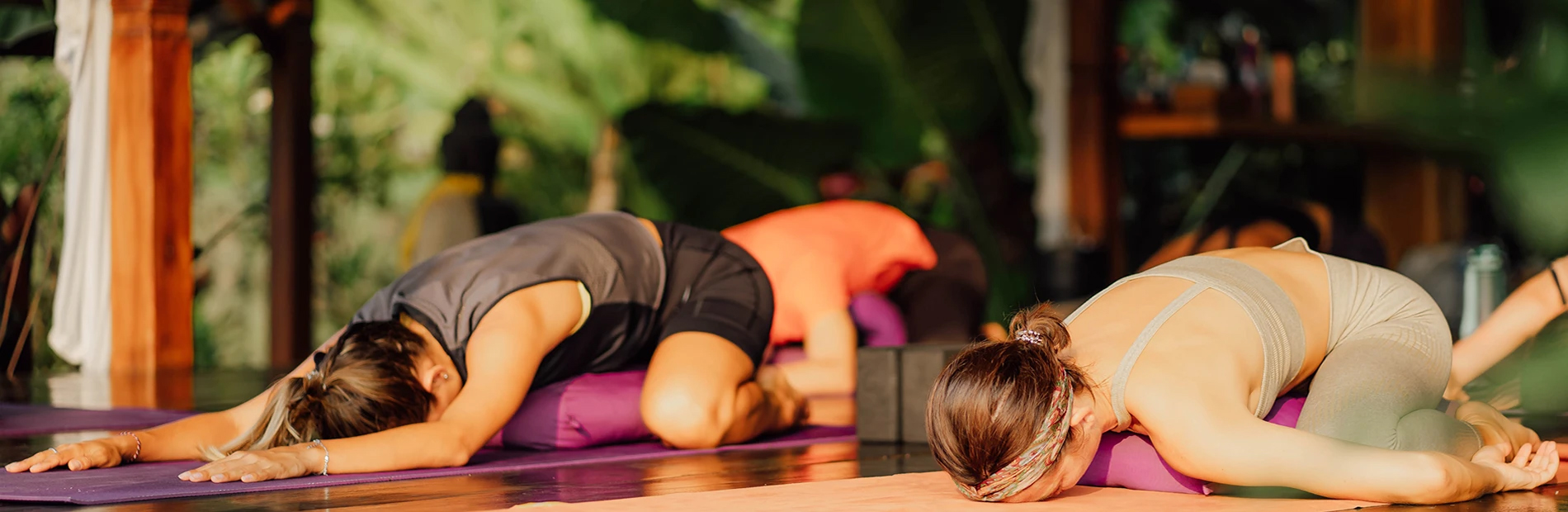
Yoga Asanas (Practice & Alignment)
Detailed study of Hatha yoga (Surya Namaskar, Pawanmuktasana series) and Ashtanga Vinyasa flow. Focus on proper alignment, modifications, and safe, effective practice.
Key Asanas by Category
The curriculum is designed to build a strong base, covering the following key asanas and sequences:
- Advanced Asana Practice (100+ Hours):
- Ashtanga Vinyasa: Mastery of the Intermediate Series (Nadi Shodhana) and refinement of the Primary Series.
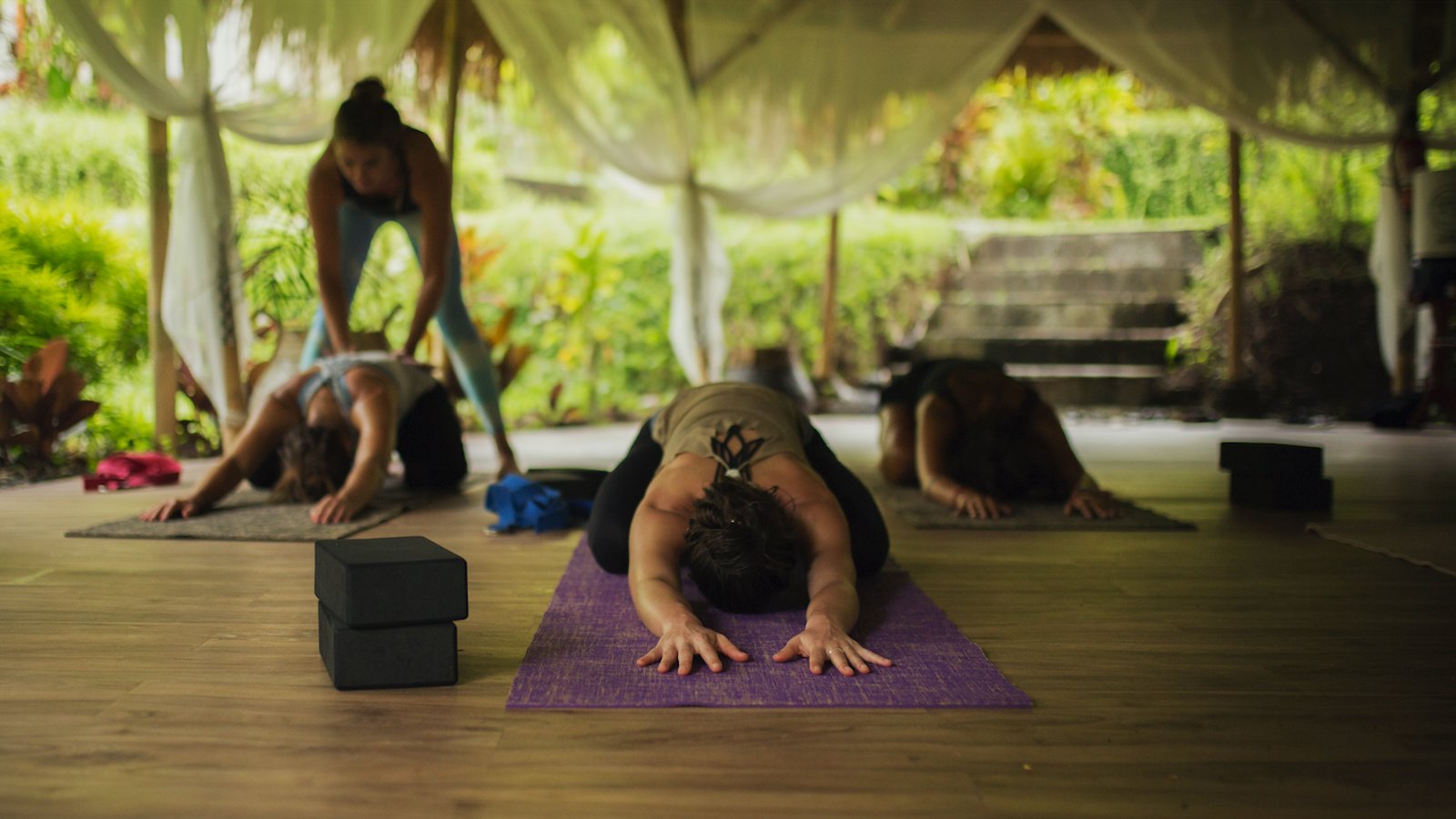
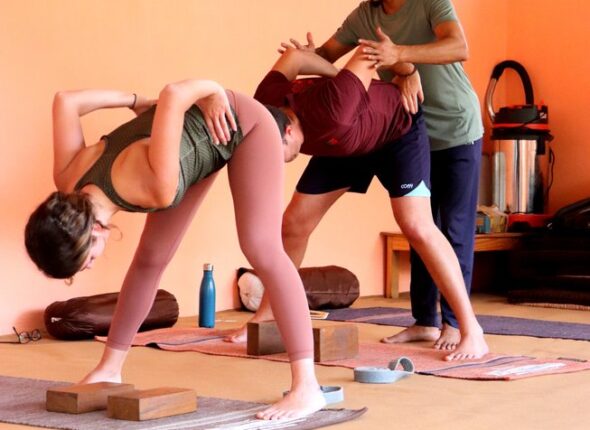
- Hatha & Vinyasa: Advanced standing, backbending, and arm-balancing postures with a focus on alignment and adjustments.
- Specialized Styles: Many schools include sessions on Yin Yoga, Restorative Yoga, or Kundalini.
- Surya Namaskar: Surya Namaskar A and B (Ashtanga Primary Series).
- Standing Postures: Tadasana (Mountain Pose), Utkatasana (Chair Pose), Trikonasana (Triangle Pose), Parshwakonasana (Side Angle Pose), Virabhadrasana (Warrior I & II).
- Forward-bend Postures: Paschimottanasana (Seated Forward Bend), Janusirasana (Head-to-Knee Pose), Padprasar Paschimotanasana.
- Back-bend Postures: Bhujangasana (Cobra Pose), Dhanurasana (Bow Pose), Ushtrasana (Camel Pose), Kandhrasana (Shoulder Pose), Chakrasana (Wheel Pose), Shalabhasana (Locust Pose).
- Twisting Postures: Ardha Matsyendrasana (Half Fish Pose), Merubakrasana.
- Balancing Postures: Vrikshasana (Tree Pose), Bakdhyanasana (Crow Pose), Natrajasana (Dancer Pose), Mayurasana.
- Inverted/Relaxation Postures: Sirsasana (Headstand), Sarvangasana (Shoulderstand), Halasana (Plow Pose), Savasana (Corpse Pose), Balasana (Child's Pose).
Curriculum Structure
- Ashtanga Vinyasa: Primary series focus for strength and flow.
- Traditional Hatha: Detailed alignment and holding of postures.
- Workshop/Alignment: Dedicated sessions for posture correction and technique.
- Shatkarma (Cleansing): Jal Neti, Sutra Neti, Kapalbhati, Trataka, and Agnisara.
- Pranayama: Nadi Sodhana, Bhastrika, Bhramari, Sheetali, Sheetkari, and Ujjayi.
Pranayama & Advanced Meditation
A 300-hour Yoga Teacher Training in Rishikesh focusing on Pranayama & Advanced Meditation offers an RYT-500 pathway for experienced practitioners, spanning 28 days. The curriculum features advanced asana (Hatha/Ashtanga), refined pranayama (kumbhaka), deep meditation techniques (Nidra/Trataka), and in-depth philosophy (Sutras/Gita) to elevate teaching methodology and spiritual practice.
- Advanced Pranayama Mastery: Techniques include Nadi Shodhana (refined), Bhastrika, Kapalbhati, and Kumbhaka (retention techniques) to control the autonomic nervous system.
- Advanced Meditation & Mindfulness: In-depth studies in traditional seated meditation, Yoga Nidra (yogic sleep), and Trataka (focused gazing) to cultivate inner stillness and awareness.
- Advanced Asana & Alignment: Detailed study of advanced Hatha, Ashtanga Vinyasa Flow, and Yin yoga with a focus on, modifications, and injury prevention.
- Subtle Body & Energetic Anatomy: Detailed exploration of Chakra, Nadis (energy pathways), and Marma points (pressure points) for energetic healing.
- Yoga Philosophy & Lifestyle: Study of the Yoga Sutras of Patanjali, Hatha Yoga Pradipika, and Samkhya philosophy.
- Teaching Methodology: Advanced sequencing, workshop design, finding one's authentic voice, and hands-on adjustments.
Yoga Philosophy & Lifestyle
- Patanjali’s Yoga Sutras
: Introduction to the foundational text of classical yoga, with a heavy emphasis on the Eight Limbs of Yoga (Ashtanga Yoga):
- Yamas: Universal ethical restraints (non-violence, truthfulness, non-stealing, etc.).
- Niyamas: Individual self-disciplines (purity, contentment, spiritual study, etc.).
- Fundamental Concepts:
- The Four Paths of Yoga
: Introduction to Karma (Action), Bhakti (Devotion), Jnana (Knowledge), and Raja (Control) Yoga.
- Three Gunas: Understanding the qualities of nature—Sattva (purity), Rajas (activity), and Tamas (inertia).
- Pancha Koshas: The five sheaths of the human body, from the physical to the bliss body.
- Chakras and Nadis: Introduction to the subtle energy system, including the seven main chakras and the flow of Prana (life force).
- Scriptural Introduction: Basic overview of ancient texts such as the Bhagavad Gita
, the
Vedas, and the
Hatha Yoga Pradipika.
Yogic Lifestyle and Ethics
Training in Rishikesh emphasizes living the practice through a disciplined daily routine.
- Sattvic Diet: Schools almost exclusively serve Sattvic (pure and balanced) vegetarian meals designed to promote mental clarity and support physical detoxification.
- Shatkarma (Cleansing Techniques): Practical introduction to traditional purification practices like Jal Neti (nasal cleansing) and Trataka (candle gazing).
- Mantra Chanting: Daily practice of reciting sacred sounds (such as the Gayatri or Shanti mantras) to create spiritual vibrations and focus the mind.
- Daily Schedule: Students follow a rigorous routine, typically starting at 5:30 AM or 6:00 AM with meditation and pranayama, followed by asana classes and philosophy talks.
- Karma Yoga: Participants often engage in selfless service (Seva), such as helping with ashram tasks, as a way to practice ego-transcendence.
Anatomy & Physiology
Basics of anatomy applied to yoga, focusing on understanding the body to prevent injuries.
- Functional Anatomy: Study of bones, joints, muscles, and their movement limitations to understand proper alignment.
- Physiology of Asana: Understanding how poses affect internal systems like respiration, cardiovascular health, and the nervous system.
- Subtle Body Anatomy: Study of the energetic body, including Chakras, Prana, and Nadis (energy channels) to deepen meditative practice.
- Injury Prevention & Therapeutic Alignment: Techniques for identifying potential injuries and utilizing props (prop usage) to provide modifications for diverse body types.
- Body Mechanics: Analysis of spinal structure and movement patterns to enhance postural stability.
Common Educational Focus:
The curriculum often pairs this academic study with daily Hatha and Ashtanga Vinyasa classes to directly apply the knowledge, ensuring students can teach with authority.
Teaching Methodology
Teaching methodology in a 100-hour yoga teacher training (TTC) in Rishikesh focuses on foundational instruction, covering alignment, verbal cues, sequencing, and practical teaching experience (practicum). The curriculum integrates Hatha and Ashtanga-Vinyasa styles with anatomy, philosophy, and pranayama to prepare students to teach basic, safe, and structured yoga classes.
- Art of Teaching/Alignment: Learning to teach proper postures (asana) with safe alignment, including verbal instructions and hands-on adjustments.
- Sequencing: Designing balanced classes, such as Sun Salutations (Surya Namaskar), Pawanmuktasana series, and basic Vinyasa flow.
- Practicum: Students practice teaching peers to build confidence and refine instructional language, often under the guidance of senior teachers.
- Yoga Anatomy & Physiology: Understanding the body's movements to prevent injuries and provide necessary modifications.
- Classroom Management: Techniques to create a welcoming and professional atmosphere, including understanding the needs of beginners.
- Pedagogy and Philosophy: Understanding how to convey yoga philosophy, meditation, and pranayama to students effectively.
Shatkarma Kriya (Yogic Cleansing)
Shatkarma Kriya (yogic cleansing) in a 100-hour Yoga Teacher Training in Rishikesh is a core, traditional component designed to detoxify the body and balance energy channels before deeper practice. Often taught early morning, typical techniques include Jala Neti, Sutra Neti, Kapalabhati, and Trataka, focused on enhancing pranayama and preparation.
- Purpose: To detoxify, balance Kapha/Pitta/Vata disorders, and remove blockages in energy channels (Nadis).
- Core Practices Taught:
- Neti (Nasal Cleansing): Jala Neti (saline water) and Sutra Neti (thread) to cleanse nasal passages.
- Kapalabhati (Skull Shining): Active breathing to clear the lungs and head.
- Trataka (Gazing): Concentrated gazing at a candle flame for mental focus and eye health.
- Dhauti/Nauli: Often introduced, focusing on stomach cleansing and abdominal churning.
- Daily Schedule Integration: Usually conducted early in the morning (e.g., 6:30 AM or 7:00 AM) to prepare the body for asana and pranayama sessions.
- Benefits: Improves focus, removes impurities, boosts respiratory health, and prepares the body for higher, more intense yoga practices.
These practices are crucial for cleansing the internal organs from the stress of modern living and diet.
Mantra Chanting
Mantra chanting in a 100-hour Yoga Teacher Training in Rishikesh is a core component, usually scheduled for 30–60 minutes daily to foster inner energy, focus, and devotion. The curriculum covers Vedic, Upanishadic, and Bhagavad Gita verses, including Om Chanting, Gayatri Mantra, Maha Mrityunjaya Mantra, and Guru Mantra to align with traditional Hatha and Ashtanga practices.
- Core Mantras: Focus on sacred sounds and vibrations including Shanti Mantra, Ganesh Mantra, and Asto ma Sadgamya.
- Daily Routine: Often paired with meditation, pranayama, or yoga philosophy sessions to enhance spiritual awareness.
- Specific Contexts: Chanting includes morning prayers, meal prayers (Bhojan Mantra), and study prayers to integrate spiritual life with daily activities.
- Surya Namaskar Mantras: 12 specific mantras chanted during Surya Namaskar (Sun Salutations).
- Purpose: The training introduces the science of sound (mantra yoga) to improve self-confidence, mental clarity, and energetic balance.
Primary Yoga Styles at Yoga Teacher Training in Rishikesh
The school's practical sessions are centered on two foundational styles of yoga:
- Hatha Yoga: Emphasizes foundational postures (asanas) and breath control to align and calm the body and mind.
- Ashtanga Yoga: A more dynamic and structured practice that follows a specific sequence of poses linked with breath.
Core Practical Components
In addition to physical postures, daily practice typically includes:
- Pranayama & Breathing: Learning ancient techniques to control and expand the life force (Prana) through the breath.
- Meditation: Various techniques, including specialized Sufi meditation, are used to work on mental and energetic levels.
- Mudras & Bandhas: The use of hand gestures and internal energy locks to direct the flow of energy during practice.
- Shatkarma (Detox): Traditional yogic cleansing techniques to purify the physical body.
Theoretical and Spiritual Study
The "shala" environment encourages deep learning beyond the mat. In our 200hr Yoga Teacher Training in Rishikesh we provide below:
- Yoga Philosophy: Study of ancient texts and the spiritual roots of yoga to understand its true purpose beyond physical exercise.
- Anatomy & Physiology: Understanding the physical effects of asanas on the body's systems.
- Spiritual Discourse: Individualized attention from teachers focused on changing mind patterns and fostering personal growth.
Moksha Yogshala Tips for Beginners
1. Preparation and Setup
- Start with Hatha or Gentle Yoga: Hatha yoga is ideal for beginners because it is slow-paced and focuses on basic postures and breathing.
- Practice on an Empty Stomach: It is advised to practice on an empty stomach or wait 2-3 hours after a meal.
- Wear Comfortable Clothing: Wear loose, comfortable, and breathable clothing that allows for movement.
- Use Props: Utilize props such as blankets, pillows, or yoga blocks to support your body and make poses more accessible.
- Create a Sacred Space: Designate a quiet, clean, and comfortable space for your practice to help you focus.
2. During the Practice
- Prioritize Breathing (Pranayama): Connect movement with breath. Deep, conscious breathing helps relax the mind and body.
- Warm Up Gently: Start with gentle warm-up exercises (like Sukshma Vyayam) to prepare your muscles and joints.
- Listen to Your Body: Never push yourself into pain. If a pose is uncomfortable, modify it, reduce the intensity, or skip it.
- Focus on Alignment: Pay attention to how your hands and feet are placed to create a stable, safe foundation.
- Keep it Simple: Focus on foundational poses like Child's Pose, Mountain Pose, or Cat-Cow to start.
3. Key Beginner Poses
- Child’s Pose (Balasana): A restorative, resting pose.
- Mountain Pose (Tadasana): A foundational standing pose that improves posture.
- Cat-Cow Stretch: A flowing movement that increases spinal flexibility.
- Downward-Facing Dog (Adho Mukha Svanasana): A strengthening and stretching pose.
- Bridge Pose (Setu Bandhasana): A calming, heart-opening pose.
4. Post-Practice and Lifestyle
- End with Relaxation (Savasana): Always end with a few minutes of quiet relaxation (Savasana or Corpse Pose) to allow the body to absorb the benefits of the practice.
- Be Consistent: A 15-minute daily practice is more beneficial than a long, one-hour session once a week.
- Be Patient: Flexibility and strength will improve with time. Avoid comparing your progress to others.
For beginners, it is highly recommended to start under the guidance of a qualified teacher to learn correct techniques and avoid injury. If participating in a retreat or training like the 21 Day 200-Hour Multi-Style Yoga Teacher Training Course in Rishikesh, be prepared for intensive study.
What’s included in 300hr Yoga Teacher Training in Rishikesh?
- Accommodation: 28 days and 27 nights in clean, spacious, and well-lit rooms with attached washrooms, surrounded by nature.
- Yoga and Curriculum Activities: All yoga classes, theoretical and practical sessions, and day trips included during the stay.
- Meals: Three freshly prepared sattvic meals daily (based on Ayurvedic principles) plus morning and evening herbal tea.
- Group Sound Healing Session: A complimentary sound healing session, where the soothing resonance of sacred instruments guides you into a state of deep peace, balancing your energies and awakening a profound sense of inner harmony.
- Certification: Internationally recognized Yoga Alliance Certification upon course completion.
- Course Materials: A detailed course manual, notes, yoga bag, and yoga t-shirt.
- Connectivity and Comfort: Free Wi-Fi and hot water showers.
- Excursions and Activities: Weekend trips to nearby mountains, hidden gems of Rishikesh, Ganga Aarti, and visits to ashrams and spiritual gurus.
Note: Meals during outings are not included, as everyone buys their own.
What’s not included in 300hr Yoga Teacher Training in Rishikesh?
- Flight Tickets: Airfare to and from India is not included.
- Airport Pickup: Two-way taxi pickup from Dehradun airport for a hassle-arrival.
Ayurvedic Massage: Indian students can access massage services for an extra fee.
- Personal Expenses: Any personal expenses during your stay.
- Sunday Meals: Meals on Sundays are not included, as the day is reserved for outings and excursions, allowing participants to explore and enjoy local cuisine at their own expense.
- Unlisted Items: Anything not mentioned in the inclusions list.
What to Bring for our 300hr Yoga TTC in Rishikesh, India?
At Moksha Yogshala, We want you to feel completely comfortable and prepared for your time with us. Below is a simple list of what to bring for your stay during the course.
Clothing Essentials
Please carry a white outfit for the opening and closing ceremonies.
Bring 2–3 pairs of comfortable yoga leggings or pants along with supportive tops.
Pack casual clothes for walks around town, light travel, or short treks.
Carry a light jacket or sweatshirt for cooler mornings and evenings.
Include sleepwear and undergarments for your daily comfort.
Flip-flops or sandals are ideal for moving around the campus.
Please carry a personal bath towel.
Yoga Gear
Yoga mats are available at the school. However, if you prefer using your personal mat, you are welcome to bring it.
All course-related study materials will be provided by the school.
Toiletries and Personal Items
Carry your basic toiletries such as soap, shampoo, toothpaste, deodorant, and sanitary products.
Personal hygiene items are recommended.
Most of these items are available in nearby local shops, so you can also purchase them after arrival if needed.
Medicines and Supplements
We provide pure Satvik vegetarian meals. If your body is not accustomed to a vegetarian diet, you may carry supplements or multivitamins as needed.
Please bring your personal prescription medicines.
It is also advisable to carry basic medications for flu, cold, muscle soreness, minor allergies, or eye dryness.
If you have any questions or need guidance, our team is happy to assist before or after your arrival. We look forward to supporting you in your yoga journey.
100hr Yoga TTC in Rishikesh, India
Rishikesh, known as the "Yoga Capital of the World," offers numerous Yoga Alliance-certified 100-hour Yoga Teacher Training (YTT) programs that typically last 12 to 14 days. These foundational courses are designed for beginners and intermediate practitioners looking to become Registered Yoga Teachers (RYT-200). Affordable 200-hour yoga teacher training in Rishikesh generally costs between USD 575 and USD 740, with Moksha Yogshala Yoga Alliance-certified school offering all-inclusive packages (meals, lodging, training).
Key Tips for Affordable Yoga Teacher Training in Rishikesh
- Choose Shared Accommodation: Triple or double sharing rooms with non-AC options are always the cheapest, often reducing costs by several hundred dollars.
- Early Bird Discounts: Booking 1–3 months in advance can save around USD 20 or more.
- Off-Season Batches: Booking during hotter months (April–June) or monsoon season can sometimes yield lower prices.
- Look for Local Schools: Schools that offer all-inclusive packages reduce hidden costs.

Affordable 200-Hour Yoga Teacher Training in India
- April 18, 2026
- Com 0
Affordable 200-hour yoga teacher training in India, particularly in Rishikesh, Goa, and Dharamshala, is widely available with prices ranging from USD 500…

Yoga Teacher Training Cost in India
- April 18, 2026
- Com 0
Yoga teacher training (TTC) fees in India typically range from ₹12,500 to over ₹80,000 for 200-hour residential courses, heavily influenced by…
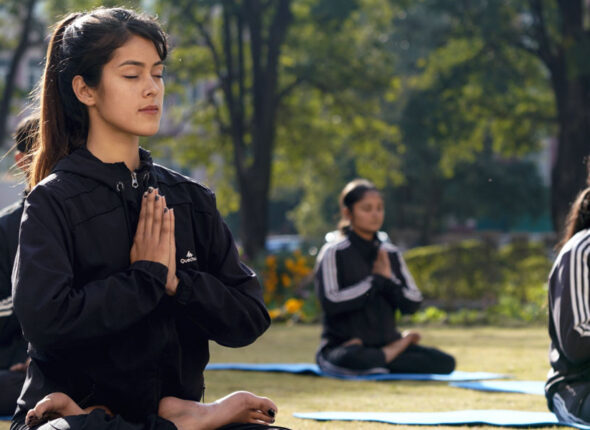
Why Rishikesh is for Yoga Teacher Training?
- April 18, 2026
- Com 0
Rishikesh is considered the “Yoga Capital of the World” and a premier location for teacher training due to its deep spiritual…
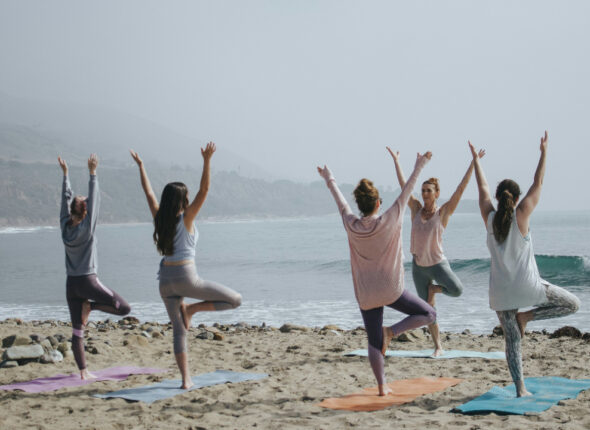
100 Hr Yoga Teacher Training

200 Hr Yoga Teacher Training
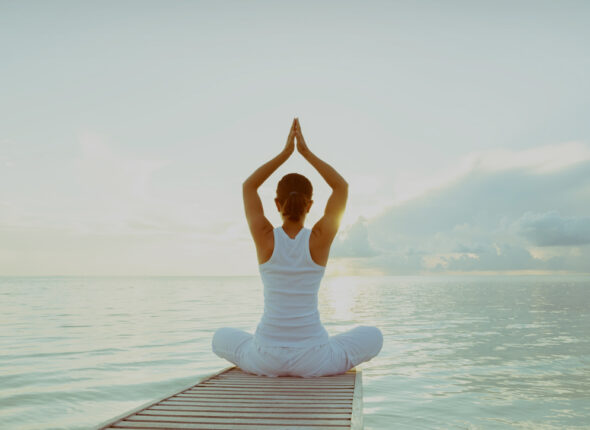
300 Hr Yoga Teacher Training

500 Hr Yoga Teacher Training
What is Usually Included?
- Certification: Globally recognised Yoga Alliance RYT certificate.
- Accommodation: Residential stay in an ashram or school hostel.
- Meals: Three vegetarian (Sattvic) meals daily.
- Extras: Course materials (manuals, neti pots), weekend excursions (Himalayan trekking, Ganga Aarti visits), and sometimes airport transfers.

Unique Rishikesh Experience
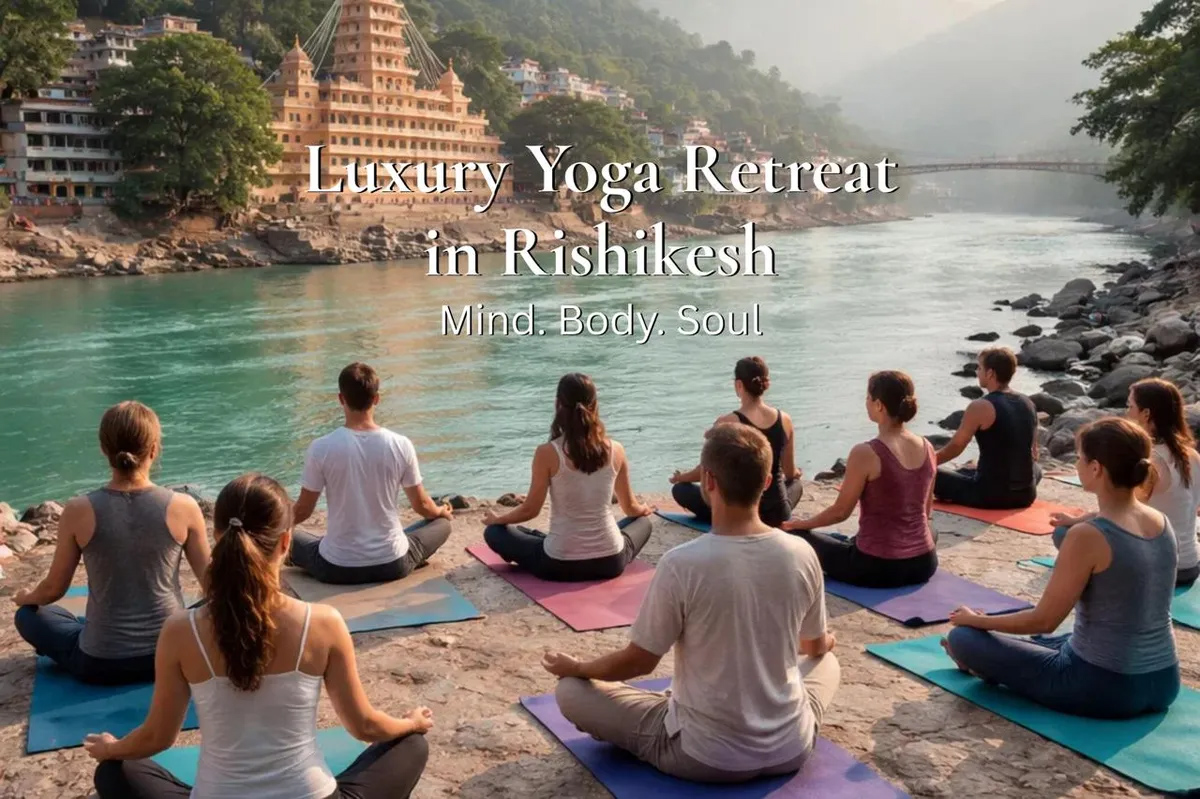
- Spiritual Immersion: Training often takes place in ashrams near the sacred Ganges River and Himalayan foothills, including attending Ganga Aarti ceremonies and meditating in ancient caves.
- Yogic Lifestyle: Students follow a Sattvic (pure) vegetarian diet and a disciplined daily schedule that typically starts before sunrise.
- Weekend Excursions: Many programs include local exploration such as mountain trekking, visiting holy temples, or white-water rafting.
Daily Schedule
Days are rigorous, typically starting before dawn and ending by 9:00 or 10:00 PM.
- 05:30 AM: Wake-up and morning silence.
- 06:00 AM: Pranayama and morning asana practice.
- 09:00 AM: Sattvic breakfast.
- 10:30 AM: Anatomy or Philosophy lectures.
- 12:00 PM: Teaching Methodology / Alignment class.
- 01:30 PM: Healthy lunch followed by self-study.
- 04:00 PM: Evening asana practice (often Ashtanga/Vinyasa).
- 06:00 PM: Meditation and mantra chanting.
- 07:30 PM: Dinner.
- 10:00 PM: Lights out.
Multi-style Yoga training with a strong community feel
Multi-style yoga training offers a versatile way to deepen your practice by blending traditional lineages like Hatha, Ashtanga, and Vinyasa with modern approaches such as Yin and Restorative yoga. These programs are designed to build a well-rounded foundation, allowing you to adapt your practice to different energy levels and physical needs.
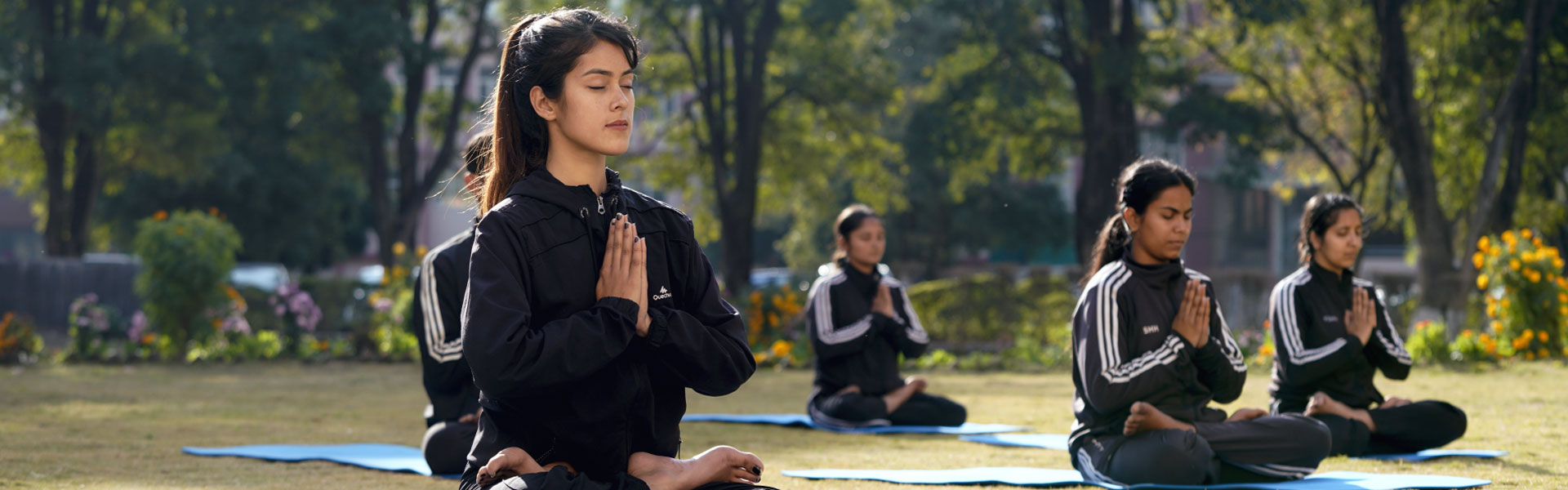
A strong community feel is often the "secret sauce" of these trainings. Schools frequently foster this through small group sizes, shared vegetarian meals, and group excursions that turn classmates into a supportive "yoga family".
Why Community Matters in Multi-Style Training in Rishikesh
- Emotional Support: Learning multiple styles can be physically and mentally demanding. Shared experiences like morning "ice baths" or "freezing yoga by the Ganga" create lasting core memories and emotional resilience.
- Collaborative Learning: A diverse group of trainees brings different perspectives, helping you understand how various styles—like the precision of Iyengar versus the flow of Vinyasa—can be applied to different bodies.
- Lifelong Connections: Many programs include shared accommodation and communal dining (Sattvic meals), which naturally facilitate deep conversations and friendships that last long after the course ends.
The Benefits of Completing a Yoga Teacher Training Program in Rishikesh
Completing a Yoga Teacher Training (YTT) program in Rishikesh, India—widely known as the "Yoga Capital of the World"—offers a unique blend of spiritual authenticity, professional certification, and personal transformation.
- Globally Recognized Certification: Most programs are Yoga Alliance certified (RYS 200, 300, or 500). This provides you with an internationally accepted credential, allowing you to teach professionally at studios, retreats, or private practices worldwide.
- Authentic Traditional Teachings: You learn yoga from its source. Many instructors are Indian masters who have studied in traditional ashrams for decades, ensuring you receive original teachings rather than "watered-down" versions common in the West.
- Comprehensive Curriculum: Beyond physical postures (asanas), programs provide deep dives into yoga philosophy (Yoga Sutras, Bhagavad Gita), human anatomy, physiology, and specialized breathwork (pranayama).
- Mentorship and Skill Building: Expert faculty provide personalized guidance on safe alignment and hands-on adjustments, which are critical for injury prevention and teaching diverse student levels.
- Deep Self-Discovery: The intensive nature of the training—often involving 5:00 a.m. wake-up calls and daily meditation—fosters self-discipline, mental clarity, and emotional resilience.
- Spiritual Energy of Rishikesh: Nestled in the Himalayan foothills along the sacred Ganges River, the city’s high spiritual vibration naturally supports inner stillness and personal reflection.
- Holistic Wellness Knowledge: Training often includes introductions to Ayurveda, yogic nutrition, and sattvic diets to help you establish a healthier, balanced lifestyle.
Practical & Social Advantages:
- Global Community: You will live and study with a diverse group of like-minded individuals from around the world, creating a supportive network and lifelong friendships.
- Inexpensive High-Quality Training: Rishikesh offers world-class education at a fraction of the cost found in Western countries. Many packages are comprehensive, including accommodation and all meals.
- Cultural Immersion: Students can participate in local traditions like the Ganga Aarti (fire ceremony), visit ancient temples, and experience authentic ashram life.
- Yoga Therapy for Health
- Key Health Benefits of Yoga Therapy
- How It Works
Yoga therapy is a personalized, evidence-based practice combining physical postures, breathing exercises, and meditation to improve physical and mental health. It acts as a complementary treatment for conditions like chronic pain, anxiety, depression, and cardiovascular issues, fostering self-empowerment and overall well-being.
Yoga therapy is considered safe when guided by a trained therapist. It is used for specialized needs, including addiction recovery, cancer recovery, and hormonal health.
- Mental Health: Effectively reduces stress, anxiety, and depression by lowering cortisol and increasing GABA neurotransmitters.
- Chronic Pain Management: Addresses musculoskeletal issues like back pain, arthritis, and tension headaches.
- Physical Function: Enhances strength, flexibility, and balance, reducing fall risks.
- Cardiovascular & Metabolic Health: Helps manage blood pressure, cholesterol, and glucose levels.
- Respiratory & Immune System: Supports lung health and can strengthen immune function.
- Individualized Plans: Tailored to an individual’s specific medical needs and limitations.
- Mindfulness & Meditation: Focuses on calming the mind to improve mental health and cognitive function.
- Breathing Techniques (Pranayama): Used to regulate the nervous system.
- Self-Empowerment: Encourages active participation in one's healing process.
Yoga Resources for Every Body
How quickly do you see results from Yoga? (Reduced stress, Better sleep)
- 17 Apr, 2026
- Com 0
You can feel mental benefits (reduced stress,...
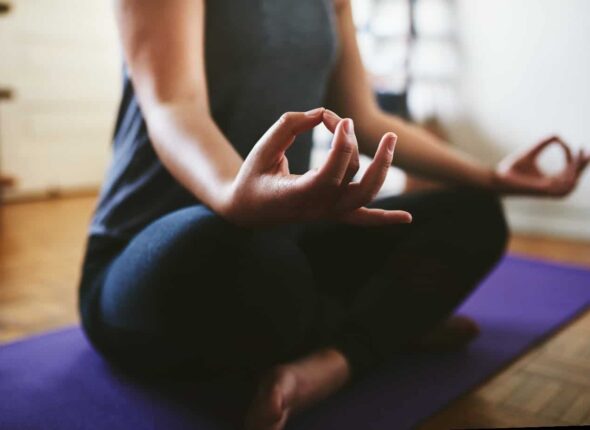
Which type of Yoga is best for Mental Health?
- 15 Apr, 2026
- Com 0
The best yoga for mental health includes...
Yoga Therapy for Happy Health Harmony
- 15 Apr, 2026
- Com 0
Yoga therapy for Happy Health Harmony promotes holistic...
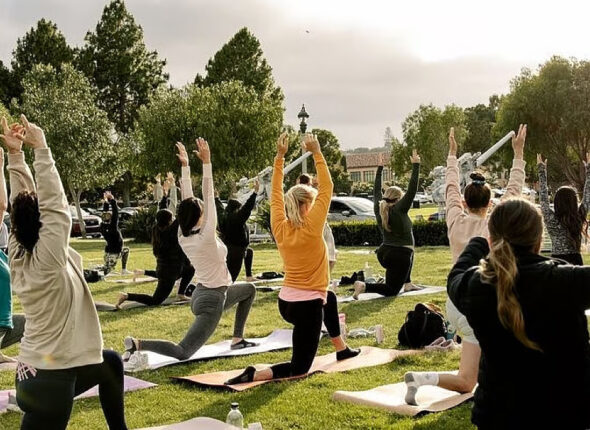
The Benefits of Yoga Detox Retreat in India
- 15 Apr, 2026
- Com 0
A yoga detox retreat in India offers...
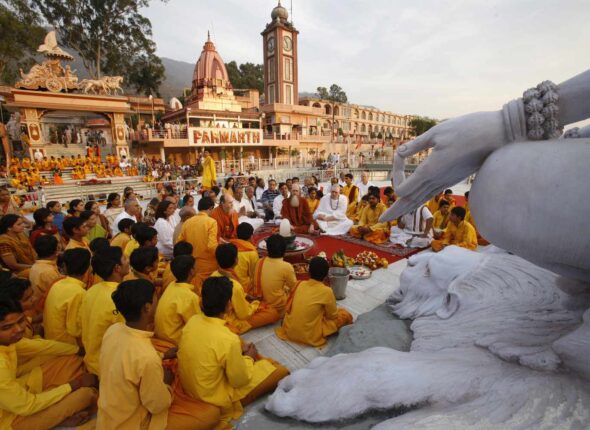
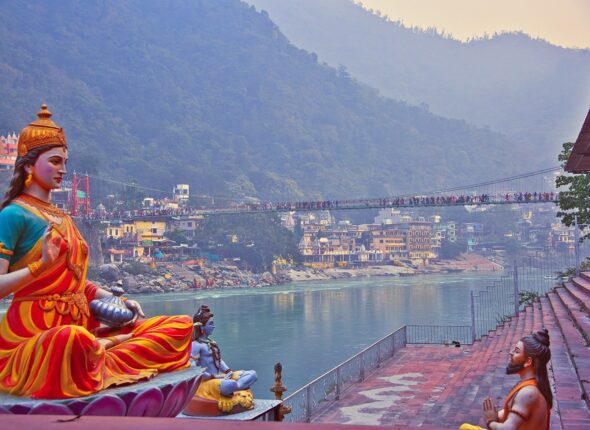
Mind-Body Connection: Yoga Tips for a Harmonious Life
- 10 Apr, 2026
- Com 0
Achieve a harmonious life through yoga by combining...
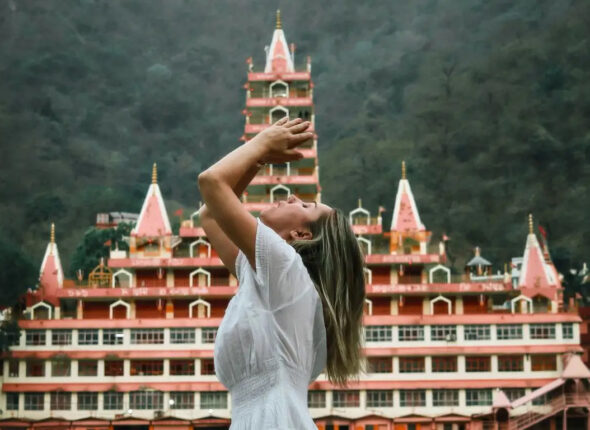
Yoga Training in Rishikesh for Happy Health harmony
- 10 Apr, 2026
- Com 0
Yoga Training in Rishikesh for health, happiness,...
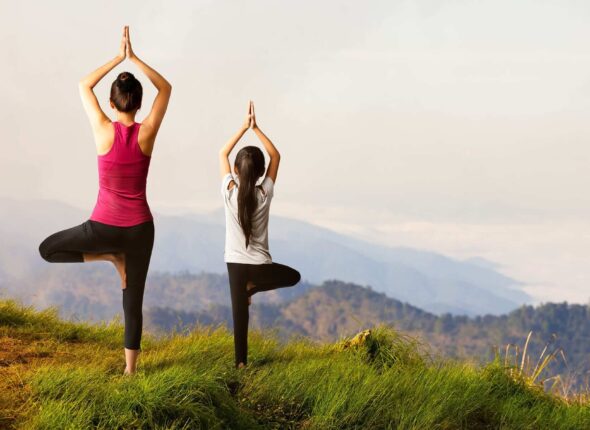
Reasons to Visit Rishikesh for Wellness Retreat?
- 10 Apr, 2026
- Com 0
Rishikesh is the premier destination for a...

What are Core Principles for Happy Health Harmony (HHH)?
- 8 Apr, 2026
- Com 0
Core Principles for Happy Health Harmony (HHH) focus...
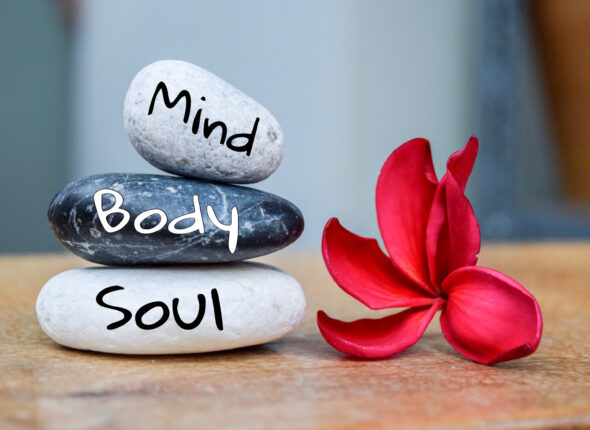
The Importance of Mind Body Spirit Balance for Happy Health Harmony
- 8 Apr, 2026
- Com 0
Achieving a balance between mind, body, and...

A Mind Body Connection for Happy Health and Harmony (HHH)
- 8 Apr, 2026
- Com 0
Achieve physical and mental balance through yoga...
Upcoming Residential Yoga TTC 2026
These courses generally offer residential, on-campus, or online options, focusing on Hatha, Vinyasa, and Ashtanga yoga styles.
| Course Duration | Triple Occupancy | Double Occupancy | Single Occupancy |
|---|---|---|---|
| 01 May - 28 May | $ 1490 USD | $ 1760 USD | $2160 USD |
| 01 June - 28 June | $ 1490 USD | $ 1760 USD | $2160 USD |
| 01 July - 28 July | $ 1490 USD | $ 1760 USD | $2160 USD |
| 01 August - 28 August | $ 1490 USD | $ 1760 USD | $2160 USD |
| 01 September - 28 September | $ 1490 USD | $ 1760 USD | $2160 USD |
| 01 October - 28 October | $ 1490 USD | $ 1760 USD | $2160 USD |
| 01 November - 28 November | $ 1490 USD | $ 1760 USD | $2160 USD |
| 01 December - 28 December | $ 1490 USD | $ 1760 USD | $2160 USD |
| 01 January - 28 January | $ 1490 USD | $ 1760 USD | $2160 USD |
| 01 February - 28 February | $ 1490 USD | $ 1760 USD | $2160 USD |
| 01 March - 28 March | $ 1490 USD | $ 1760 USD | $2160 USD |
| 01 April - 28 April | $ 1490 USD | $ 1760 USD | $2160 USD |
| 01 May - 28 May | $ 1490 USD | $ 1760 USD | $2160 USD |